When you read recipes, compare drink volumes, or check cup sizes, you will often see both oz and cups used as units. At first glance, this may seem like a simple conversion question. But in reality, what confuses many people is not just the math. The real question is whether oz refers to fluid ounces or ounces used as a unit of weight.
This article will first explain the basic rule for converting oz to cups, then provide a quick reference chart for common sizes. We will also cover an important point that is often overlooked: not every value written in oz can be converted with the same formula. Finally, we will connect these numbers to common cup sizes and real-world use cases to help you understand them more intuitively. This article uses the standard US cup system.
Related Article: The Ultimate Paper Cup Size Chart in ml, oz & inches
Part 1: The Basic Rule: 1 Cup = 8 Fluid Ounces
If you are using the common US volume system, the basic conversion rule is very simple:
1 cup = 8 fluid ounces
The formula is:
cups = fluid ounces ÷ 8
For example, 4 fluid ounces ÷ 8 = 0.5 cup, which means 4 fl oz = 1/2 cup.
Common values such as 3 oz, 6 oz, 12 oz, and 16 oz can all be converted using this rule, as long as the oz here refers to fluid ounces.
Part 2: Common Oz to Cups Conversion Chart
If oz refers to fluid ounces, then converting to cups is easy. You simply divide by 8. To make things easier to check, here is a quick reference chart with some common conversions.
| oz | cups |
| 1 oz | 1/8 cup |
| 2 oz | 1/4 cup |
| 3 oz | 3/8 cup |
| 4 oz | 1/2 cup |
| 6 oz | 3/4 cup |
| 8 oz | 1 cup |
| 12 oz | 1.5 cups |
| 14 oz | 1.75 cups |
| 16 oz | 2 cups |
| 20 oz | 2.5 cups |
| 24 oz | 3 cups |
| 32 oz | 4 cups |
Part 3: When Can You Use Oz ÷ 8, and When Can’t You?
Understanding oz to cups is not just about doing a simple division problem. The first thing you need to know is whether you are converting volume or weight.
In everyday use, many people treat oz as a single universal unit. But in reality, it can mean fluid ounces, which measure volume, or ounces, which measure weight. They look very similar in writing, but they are not the same thing.
Here is a practical way to tell the difference:
If you are dealing with water, milk, beverages, soup, or sauces, or if you are looking at cup capacity, you can usually understand oz as fluid ounces and convert it by dividing by 8.
But if you are dealing with flour, sugar, grains, nuts, or chocolate chips, especially in recipes where the measurements are clearly weight-based, you should not use this formula directly. In those cases, you should first look at the recipe’s context or check the conversion for that specific ingredient.
Part 4: Common Oz Cup Sizes and Their Use Cases
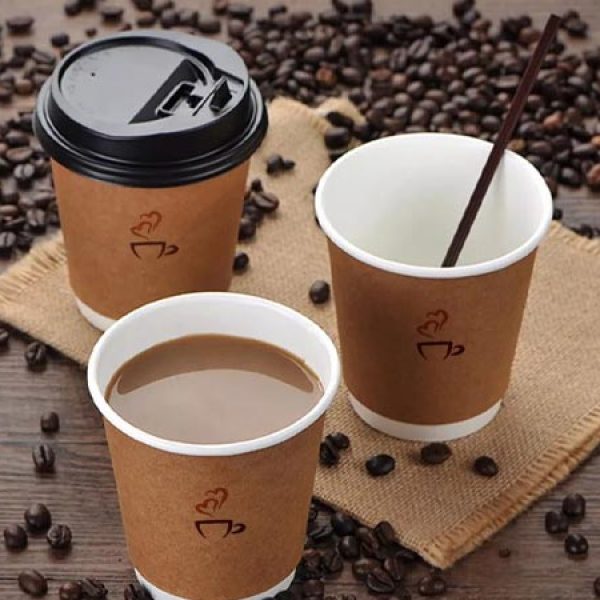
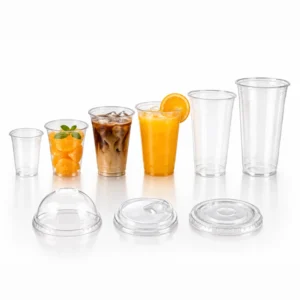
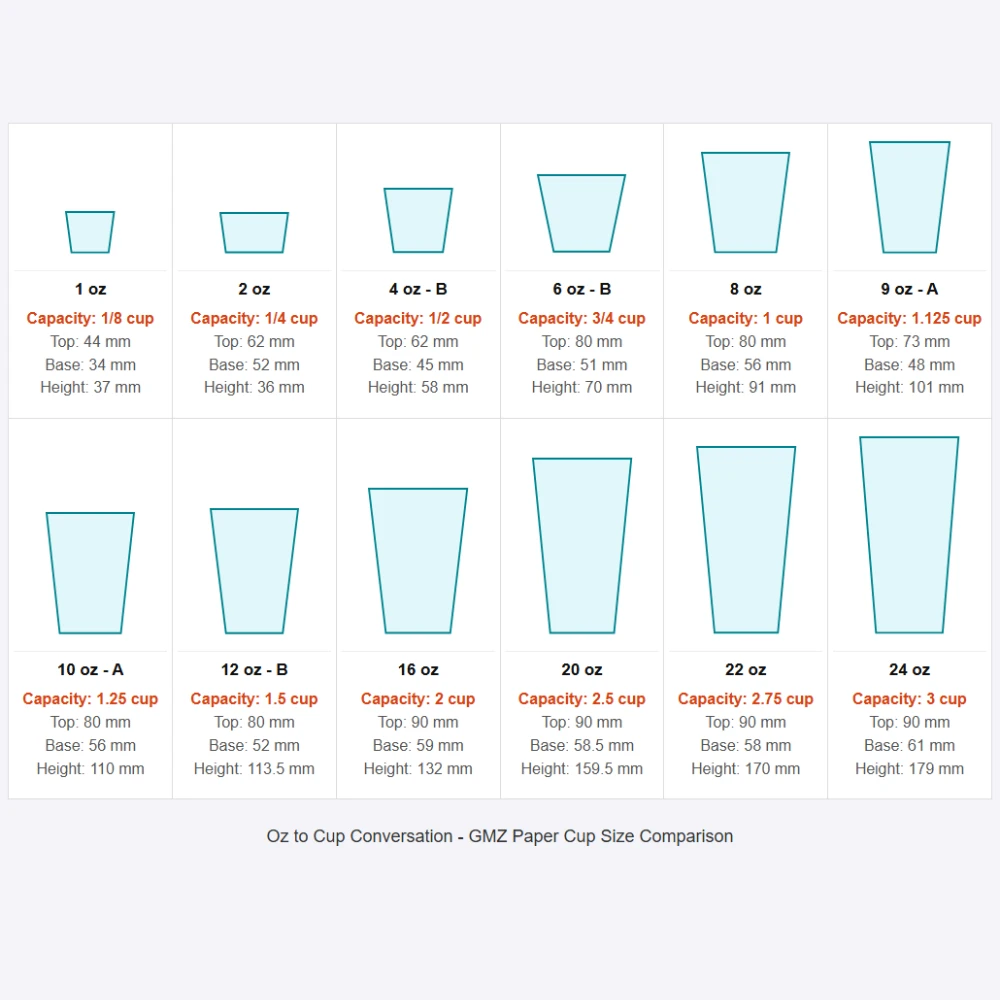
Looking at conversion numbers alone, you may still find it hard to build a clear picture of how large different sizes actually are. Compared with reading a chart alone, comparing images of cups of different capacities makes it much easier to understand the actual size differences between common formats.
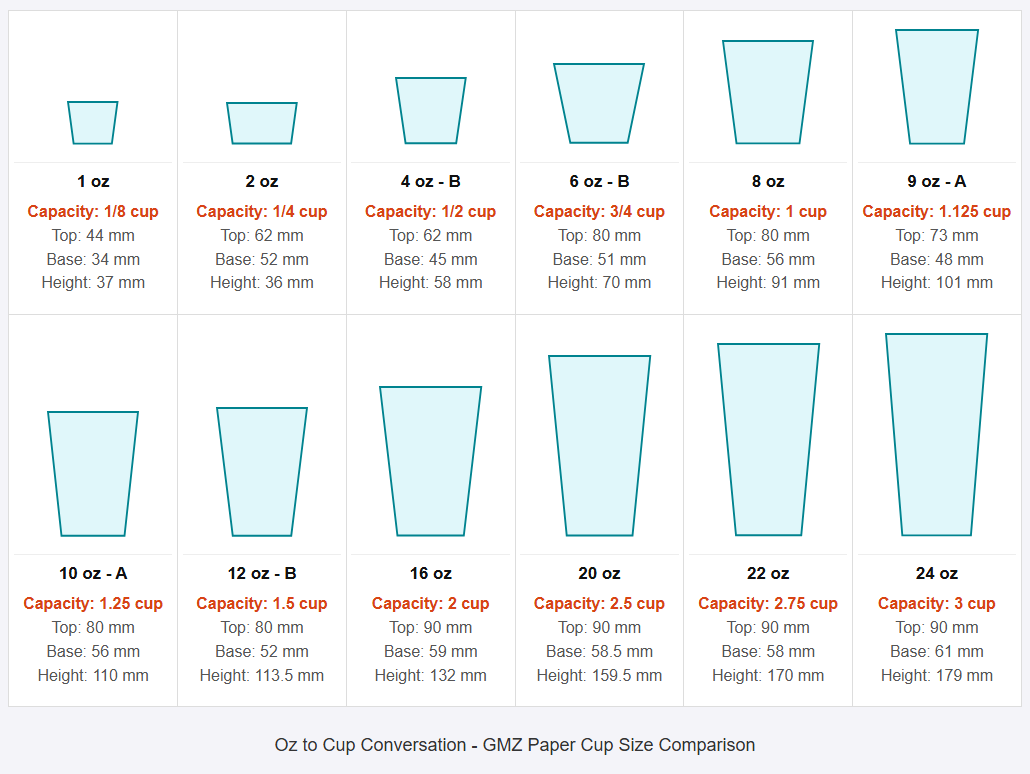
The conversion chart above helps you quickly see how much 1 oz, 4 oz, 12 oz, or 16 oz equals in cups. But the table below focuses on another practical question: what kinds of cups and use cases these common sizes are usually associated with in real life.
| Common Use Case | Common Sizes |
| Sample Cups / Sauce Cups | 1 oz, 2 oz, 3 oz, 4 oz |
| Shot Cups | 1.25 oz, 1.5 oz, 2 oz |
| Mini Dessert Cups | 3 oz, 4 oz, 5 oz, 6 oz |
| Kids’ Drink Cups | 4 oz, 6 oz, 8 oz |
| Outdoor Mulled Wine Cups | 6 oz, 8 oz, 12 oz |
| Coffee Cups | 8 oz, 12 oz, 14 oz, 16 oz |
| Milk Tea / Cold Drink Cups | 12 oz, 14 oz, 16 oz, 20 oz, 24 oz |
| Disposable Beer Cups | 12 oz, 14 oz, 16 oz, 20 oz |
| Soup Bowls | 6 oz, 8 oz, 12 oz, 16 oz, 20 oz, 24 oz, 32 oz |
| Large Sharing Drink Cups | 24 oz, 32 oz |
For packaging buyers, cup selection, and drink volume planning, these high-frequency sizes are often more useful than conversion results alone. Of course, cup sizes don’t have to be limited to these standard options—custom sizes are available as well. For example, our factory can produce disposable paper cups tailored to specific customer requirements on material, printing and size.
FAQs
1. How many oz are in 1 cup?
In the standard US volume system, 1 cup equals 8 fluid ounces.
2. Is 4 oz half a cup?
If you are talking about fluid ounces, then yes, 4 oz is half a cup.
3. How many cups is 6 oz?
If you are measuring liquid volume, 6 oz equals 3/4 cup.
4. How many cups is 3 oz?
If you are converting fluid ounces, then 3 oz = 3/8 cup.
5. How many cups is 12 oz?
In standard US volume conversion, 12 fluid ounces = 1.5 cups. That is also why 12 oz is often seen as a size slightly larger than a standard cup.
6. Is 16 oz equal to 2 cups?
If 16 oz refers to 16 fluid ounces, then yes, 16 oz equals 2 cups.
7. Are ounces and fluid ounces the same?
Not exactly. In everyday writing, people often shorten both to oz, but the meaning depends on the context. Fluid ounces measure volume, while ounces can also measure weight. If you are converting liquids or cup capacity, oz usually refers to fluid ounces. But if you are measuring ingredients such as flour, sugar, or grains, you need to check whether the recipe is using weight.
8. Can I convert dry ounces to cups the same way?
Not always. If you are dealing with dry ingredients, ounces often refer to weight, while cups measure volume. In that case, you cannot simply divide by 8. Different ingredients have different densities, so even the same 4 oz may convert to different cup values depending on the ingredient.
Conclusion
In everyday use, converting oz to cups is usually simple: 1 cup = 8 fluid ounces. But it is important to remember that this rule only works when oz refers to fluid ounces. If you are dealing with solids or weight-based measurements, the same formula does not apply.
GMZ has long worked in the disposable food packaging industry and has built up practical experience with common cup sizes and real-world application scenarios. If you are exploring how different cup sizes are used in packaging, feel free to contact us.