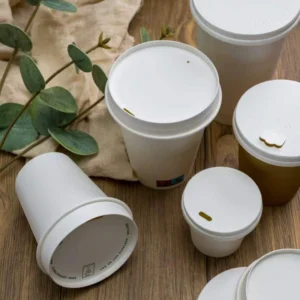
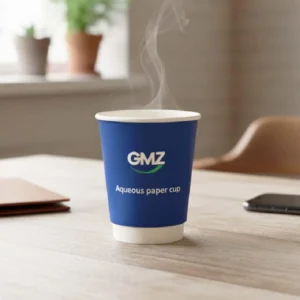
As sustainability policies continue to tighten in many parts of the world, brands, foodservice businesses, and wholesale buyers are paying more attention to sustainable packaging. As a result, compostable cups have been mentioned more frequently in recent years. Many people know that they are seen as a more eco-friendly alternative to traditional disposable cups. But once they look more deeply, new questions often come up: are compostable cups made of paper, plastic, or plant fiber? And why are some products labeled “compostable” yet still divided into “industrial compostable” and “home compostable”?

This article will start with these key questions and walk you through the definition of compostable cups, the materials commonly used to make them, and the real differences between different composting end-of-life conditions.
What Are Compostable Cups?
In the composting industry, compostable products are generally understood to be those that break down under specific composting conditions after use. Based on this idea, compostable cups can be understood as disposable cups that are designed with end-of-life treatment in mind from the material stage. In other words, they are not only designed to hold drinks and meet normal-use needs, but also to fit into a composting process after disposal.
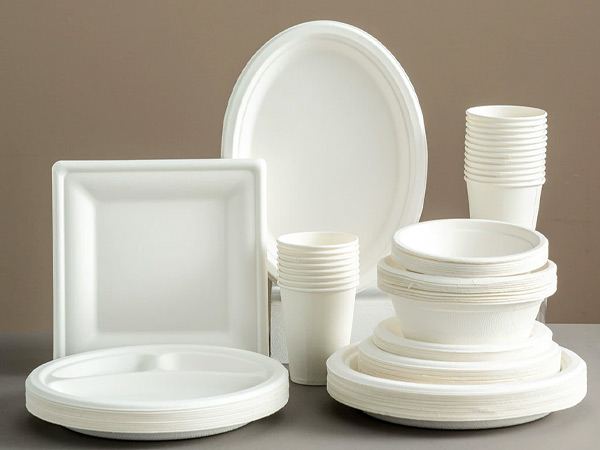
From an industry development standpoint, compostable cups are not a new concept. Their commercial development dates back to the early 2000s, and they have gradually matured alongside the development of compostable materials, food packaging technology, and environmental policies. As the market continues to build stronger awareness of sustainable packaging, this category is still expected to have room for growth in the future.
What Are Compostable Cups Made Of?
Compostable cups are not made from one fixed material. Simply put, they are a type of cup designed for composting, so different material types can be used. In today’s market, compostable cups are mainly divided into three groups: compostable plastic cups, paper-based cups with a compostable barrier coating, and plant-fiber compostable cups.
Before looking at them in detail, let’s first use a simple table to compare the main differences between these three types of compostable cups.
| Type | Main Materials | Common Uses | More Common Composting Conditions | Main Cost Factors for Buyers |
| Compostable plastic cups | PLA, PHA | Cold drinks, juice, iced coffee | Most are more commonly linked to industrial composting | Material type, clarity requirements, cup size/specification, order volume |
| Paper-based cups with compostable barrier coating | Paper + compostable barrier layer | Hot drinks | Depends on the paper and barrier structure | Paper weight, coating type, printing needs, certification requirements |
| Plant-fiber compostable cups | Bagasse, pulp, and other plant fibers | Hot drinks or food containers | Depends on product structure and specific materials | Molding process, thickness, size, order volume |
1. Compostable Plastic Cups
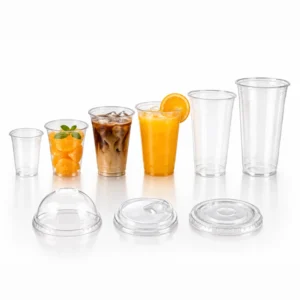
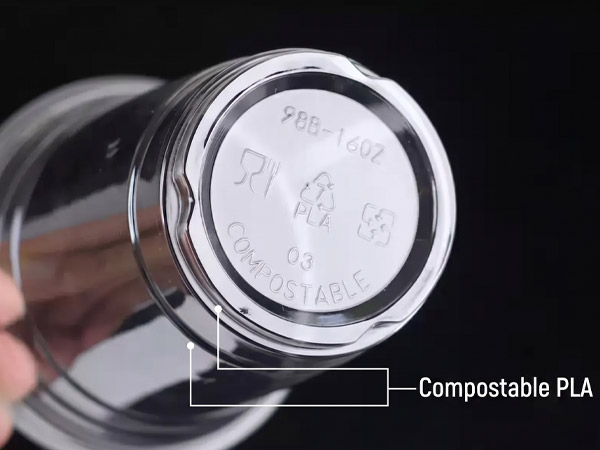
Compostable plastic cups look very similar to regular clear plastic cups, which is why they are also among the easiest to misunderstand. Common materials include PLA and PHA. PLA usually comes from plant-based raw materials such as cornstarch, while PHA is another type of bio-based material. Because of their form and performance, these cups are more commonly used for cold drinks, juice, and iced coffee.
2. Paper-Based Cups with Compostable Barrier Coating
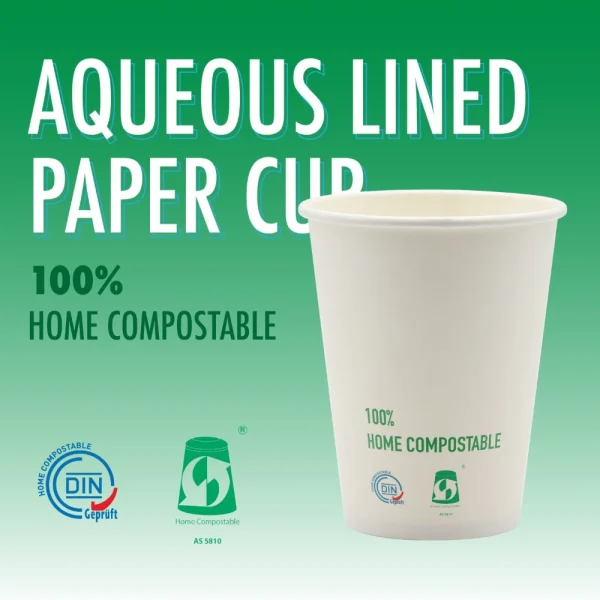
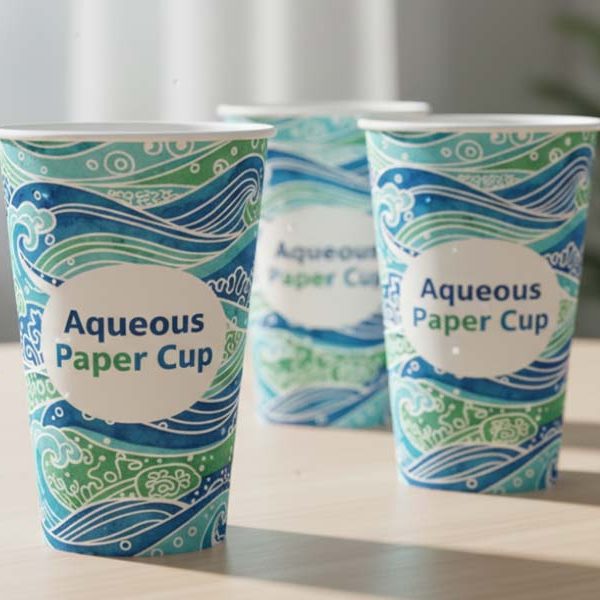
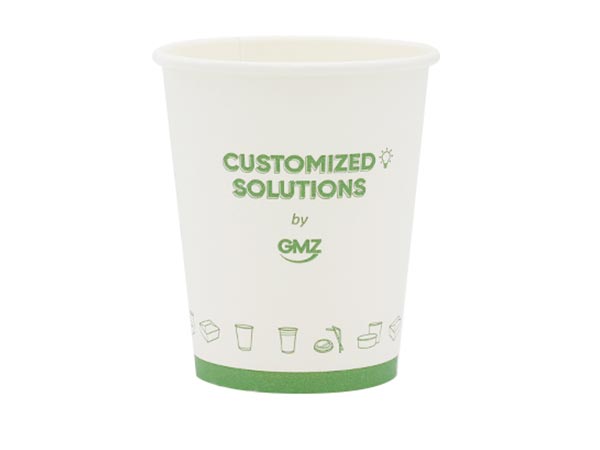
Besides compostable plastic cups, paper-based cups with a compostable barrier coating are also common. These cups usually use paper as the main body, with an inner layer added to resist liquids, grease, or leakage. For this reason, they are more commonly used for hot drink cups. Common options today include PLA-coated paper cups, PHA-coated paper cups, and water-based coated paper cups. As the market continues to develop, water-based coated paper cups have also made further progress toward home compostability, which we will discuss later.
3. Plant-Fiber Compostable Cups
In addition to the two types above, plant-fiber compostable cups are also one of the main product groups in this category. Common examples include bagasse (sugarcane fiber), molded pulp, and other plant-fiber materials. These products use plant fiber itself to form the cup body or container structure. Of course, this does not always mean they are made from “100% pure fiber,” because in real production, some products may still include extra barrier layers, binders, or other supporting materials to improve water resistance, grease resistance, or overall performance.
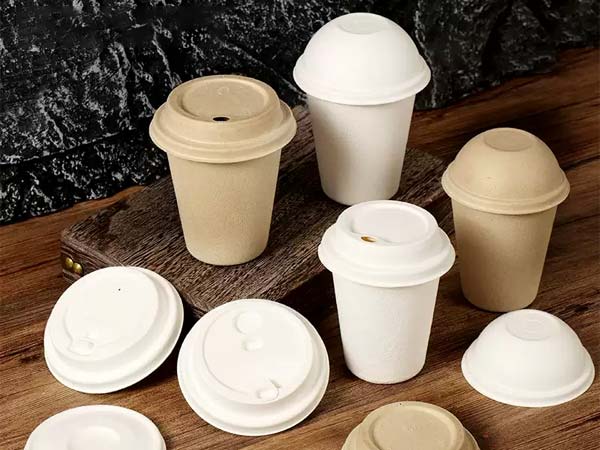
So, compostable cups are not one single product made from one single material. Instead, they are a category made up of several different material types. That naturally leads to the next question: if the materials are different, do they all break down in the same composting environment? That is what we will look at next.
Industrial vs Home Compostable Cups: What’s the Difference?
As mentioned earlier, home compostable cups are being discussed more and more as the market develops. This also shows that not all compostable cups break down in the same environment. According to European Bioplastics, home composting is a smaller-scale process with lower temperatures and more changing conditions, while industrial composting depends on more controlled facilities and a more stable treatment system. In other words, two cups may both be labeled compostable, but they may not be suitable for the same end-of-life conditions.
1. Industrial Compostable Cups
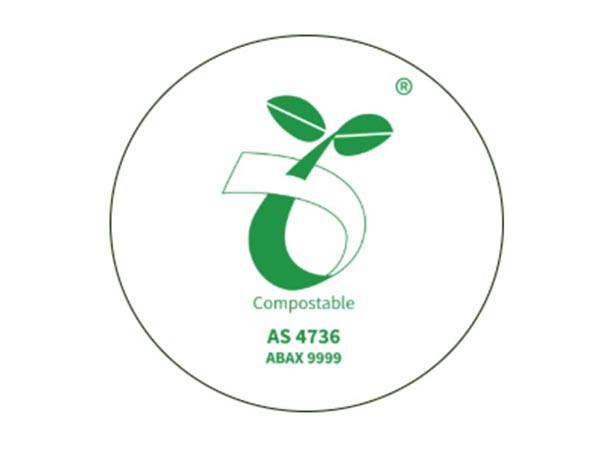
As the name suggests, industrial compostable cups are cups that need to go into an industrial composting facility, where temperatures are higher, conditions are more stable, and management is more controlled, in order to break down according to the required standard. In fact, many compostable cups on the market today belong more to this category. The reason is not hard to understand: industrial composting conditions are easier to control and can work with a wider range of materials. Because of that, industrial compostability has long been the more common option in compostable packaging. In Australia, for example, AS 4736 is the standard linked to commercial and industrial composting.
2. Home Compostable Cups
By comparison, home-compostable cups usually face higher requirements. That is because they are not tested under the high-temperature, tightly controlled conditions of industrial facilities. Instead, they must still perform under lower, more variable, and less stable home composting conditions. In Australia, AS 5810 is one of the best-known standards for home compostability and is used to verify performance under home composting conditions.
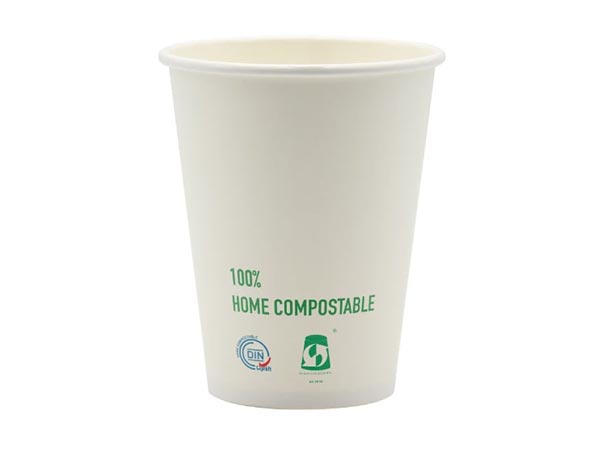
Because the standard is harder to meet, home compostable cups are becoming more valuable as consumers pay closer attention to environmental labels and as some markets care more about whether end-of-life disposal is truly realistic.
3. Why This Difference Matters in the Real Market
If you are a brand owner, foodservice business, or buyer, and your target market already has a relatively mature organic waste collection or commercial composting system, industrial compostable cups may already meet part of your packaging upgrade needs.

However, if your market, sales channel, or end consumers are paying more attention to home-compostable claims, the product focus may start to change. Starbucks EMEA, for example, began rolling out new home-compostable hot drink cups and paper lids in Europe in 2025. This shows that large brands are also starting to pay attention to higher-level sustainable packaging claims.
Conclusion
To sum up, compostable cups are not cups made from a single material. They are a product category designed to support composting at the end of life. They may be made from compostable plastics such as PLA or PHA, from paper with a compostable barrier coating, or from plant-fiber materials.
For brands, foodservice businesses, and wholesale buyers, the real question is not only whether a cup is labeled compostable. It is also important to look at the actual use case and whether the product is better matched to industrial compostable or home compostable conditions.
That is also why, when GMZ provides compostable cup solutions, we do not only focus on product performance in use. We also pay attention to the real differences in market demand between industrial compostable and home compostable products. For buyers with bulk-purchasing needs, this kind of judgment can be more useful than simply relying on a single environmental label.